
Introduction
Choosing the correct Income Tax Return (ITR) form is essential for accurate tax filing. Filing with the wrong form can result in rejection, penalties, or delays in refunds. This guide explains the difference between ITR-1, ITR-2, ITR-3, and ITR-4 to help you make the right choice.
What is an ITR Form?
An ITR form is used to declare your income, claim deductions, and report taxes paid. The correct form depends on your income source, total income, and financial activities.
Types of ITR Forms in India
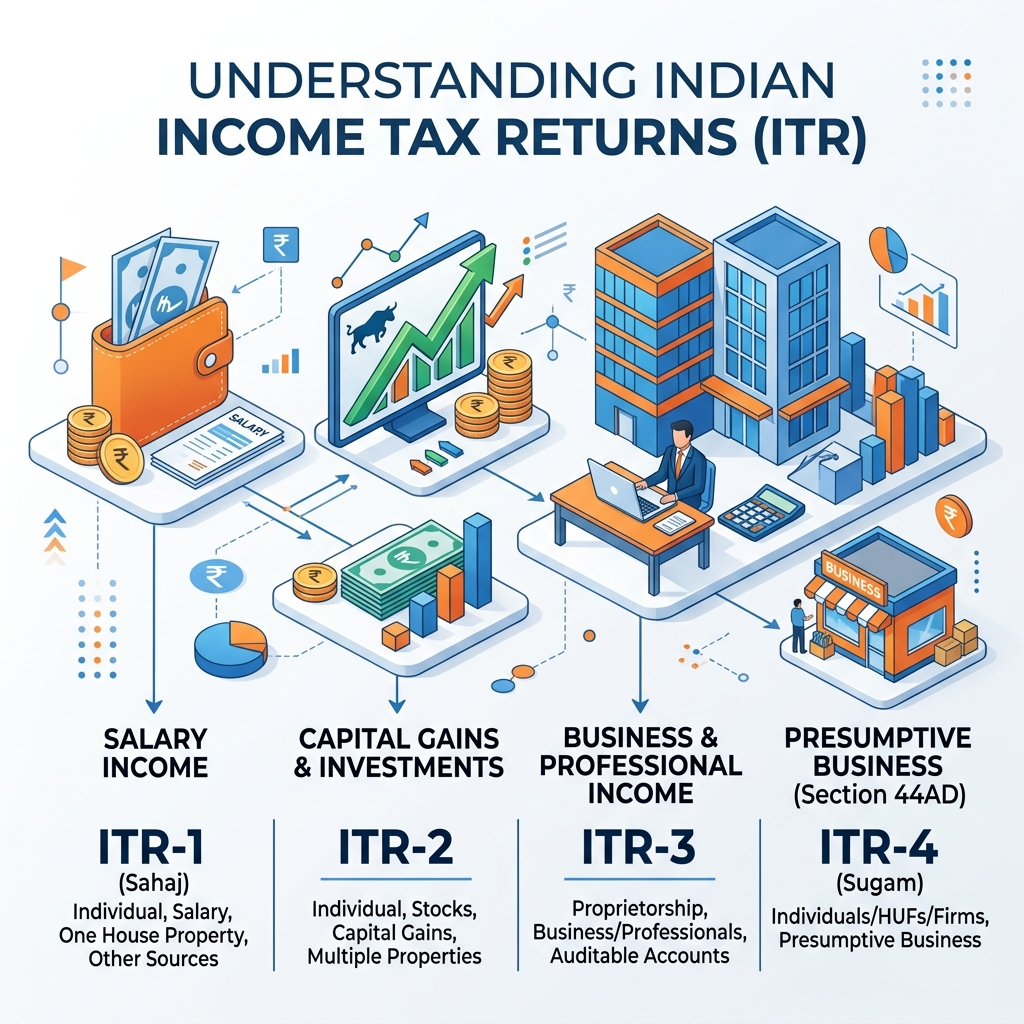
ITR-1 (Sahaj) – For Salaried Individuals
Best suited for individuals with:
- Salary or pension income
- One house property
- Total income up to ₹50 lakh
Not applicable if you have capital gains, foreign income, or multiple properties.
ITR-2 – For Capital Gains & High-Income Individuals
Suitable for individuals who:
- Earn from stocks, mutual funds, or property sales
- Own multiple house properties
- Have income above ₹50 lakh
Not applicable for business or professional income.
ITR-3 – For Business Owners & Professionals
Designed for individuals who:
- Run a business
- Work as freelancers or consultants
- Earn professional income
Requires detailed income reporting and is suitable for complex financial situations.
ITR-4 (Sugam) – For Presumptive Taxation
Ideal for:
- Small business owners and freelancers
- Income under presumptive taxation scheme
- Simplified tax filing
How to Choose the Right ITR Form
- Salary income only → ITR-1
- Capital gains or multiple properties → ITR-2
- Business or freelance income → ITR-3
- Presumptive income scheme → ITR-4
Common Mistakes to Avoid
- Filing ITR-1 with capital gains
- Selecting the wrong form for business income
- Not reporting all income sources
- Ignoring eligibility conditions
Why Choosing the Right ITR Form Matters
- Ensures accurate tax filing
- Avoids notices and penalties
- Speeds up refund processing
- Maintains compliance with tax laws
Conclusion
Selecting the right ITR form depends on your income type and financial profile. A correct choice ensures smooth filing and avoids future complications. When in doubt, professional guidance can help you file accurately and efficiently.